No. Zendesk has no native, purpose-built integration with ROLLER. You can build a bridge, because ROLLER has the most open API of any booking platform in this category, and it still will not check availability or create a booking inside the conversation. Zendesk is a customer-service helpdesk. ROLLER is venue-management software for attractions and leisure operators, handling ticketing, session times, party packages, waivers and point of sale. They were built for different jobs, and party enquiries fall through the gap between them.
The short answer
Zendesk can receive a ROLLER enquiry as a ticket. It cannot do anything with it in ROLLER. Checking session availability, holding a party slot, adding the food package, sending the waiver: all of that still happens by hand, in ROLLER, by a person.
Zendesk + ROLLER | |
|---|---|
Native integration | None |
Best available workaround | A custom build on Zendesk's API and ROLLER's open API |
What the workaround still can't do | Check live session availability, hold or create a party booking, attach a package, read the guest's booking history |
ROLLER deserves credit here that most of its peers do not. Its API is genuinely open and self-serve documented, not partner-gated behind a commercial agreement. That makes this the one cell in the matrix where the custom build is realistically within reach of a competent developer. Which is exactly why it is the clearest illustration of the real problem.
What actually happens to a booking enquiry
Leisure venues live on party and group bookings, and those enquiries are long, detailed conversations rather than one-line requests. Here is the real journey of one enquiry when Zendesk and ROLLER do not talk to each other.
A parent emails asking about a birthday party for 12 children on a Saturday in three weeks, wanting to know about party packages, whether food can be added, and whether one child who uses a wheelchair can be accommodated. The message becomes a Zendesk ticket.
An agent opens the ticket and reads it.
The agent opens ROLLER in another tab, because Zendesk cannot see the session schedule.
They check which Saturday sessions have capacity for 12, which party rooms are free either side of that session, what the package options and prices are, and what the accessible provision is.
They put a hold on the session and the room in ROLLER, re-keying the date, the numbers, the package and the accessibility note from the email.
They switch back to Zendesk and write the reply, listing package options and prices.
They mark the ticket solved, or more likely set it pending, because a party enquiry almost never closes on the first reply.
The parent replies two days later: "Can we make it 15, add the pizza package, and does the hold still stand?" The agent repeats steps 3 to 7, and the hold may have already expired.
Every enquiry is handled twice, in two systems, by a person copying the same fields between screens. Party enquiries make this worse than a restaurant booking does, because the thread runs over days and each round trip repeats the whole loop. One operations director described the inbox behind this workflow as "a black hole, no KPIs, no response rate, nothing," because the work happened in tabs and tickets that no report could see.
The sharper cost is the enquiry you never hear about again. A parent planning a birthday is emailing three venues on a Sunday evening, and the first useful reply usually wins. A roughly 40-venue entertainment group lost a single booking worth £40,000 because the enquiry arrived outside working hours and nobody replied in time. A three-site pizza group put it more bluntly about a 30 to 40 cover enquiry: "It just sat there. No one saw it. They went somewhere else." Zendesk did not cause those losses. Routing bookings through a system that cannot book anything is what makes the delay inevitable.
What Zendesk actually connects to
Zendesk has a large marketplace: CRMs, e-commerce platforms, telephony, analytics, workforce tools. What it does not have is a connection to booking or venue-management systems, because those are not the tools its core market runs. Zendesk sells into software, retail and financial services. Search the Zendesk Marketplace and you will find Salesforce and Shopify, not ROLLER.
ROLLER's side is the most open in this whole comparison, and it is worth being accurate about that. ROLLER publishes an open API that developers can build against without negotiating a partnership first, and it maintains a partner directory of around ten integrations covering marketing and finance tools: Mailchimp, Klaviyo, Brevo, Xero, NetSuite, Microsoft Power BI, Google Tag Manager and inventory systems. No customer-service helpdesk appears in that directory, and ROLLER is not on Zapier, but the open API means a custom Zendesk bridge is genuinely buildable rather than theoretical.
So build it, and look honestly at what you get. You can push enquiry data into a ticket, and you can pull booking records out to display alongside it. What you cannot do is give the agent a live view of Saturday's session capacity inside the ticket, let them place a hold from the reply window, attach a package, or extend a hold that is about to lapse. Zendesk AI, the platform's answer bot and agent copilot, can suggest a reply from your knowledge base and past tickets, but it has no line into the schedule and cannot take a single action inside ROLLER. The best available bridge, built on the most open API in the category, still leaves steps 3 to 7 exactly where they were. That is the point: the barrier is not API access, it is that a helpdesk has no concept of a booking.
Why this matters for booking enquiries
A support ticket and a booking enquiry look similar and behave nothing alike. A support ticket is resolved by a reply. A booking enquiry is only resolved when a slot is held in the schedule. That difference is the whole problem.
The helpdesk can write a polished reply. It cannot book the party. The transaction, the part that actually earns the revenue, still lands on your team, one enquiry at a time. This is why most operators that run Zendesk for customer service (refunds, complaints, lost property) still run their booking enquiries through a shared Gmail or Outlook inbox. The helpdesk never solved the booking side, so the old inbox stayed, and with it the double-handling and the black box.
What it looks like when the tool is built for booking enquiries
The gap closes when the enquiry and the booking live in one place, so a party enquiry is answered and held in a single reply. This is what RevVue does, and it is easier to show than to describe.
Every enquiry is tagged to the venue it is for, which matters for an operator running several attractions with different capacities and session times. A question about one site is never answered with another site's slots, because the team works from one queue, by location, rather than a ticket queue that treats every site the same.
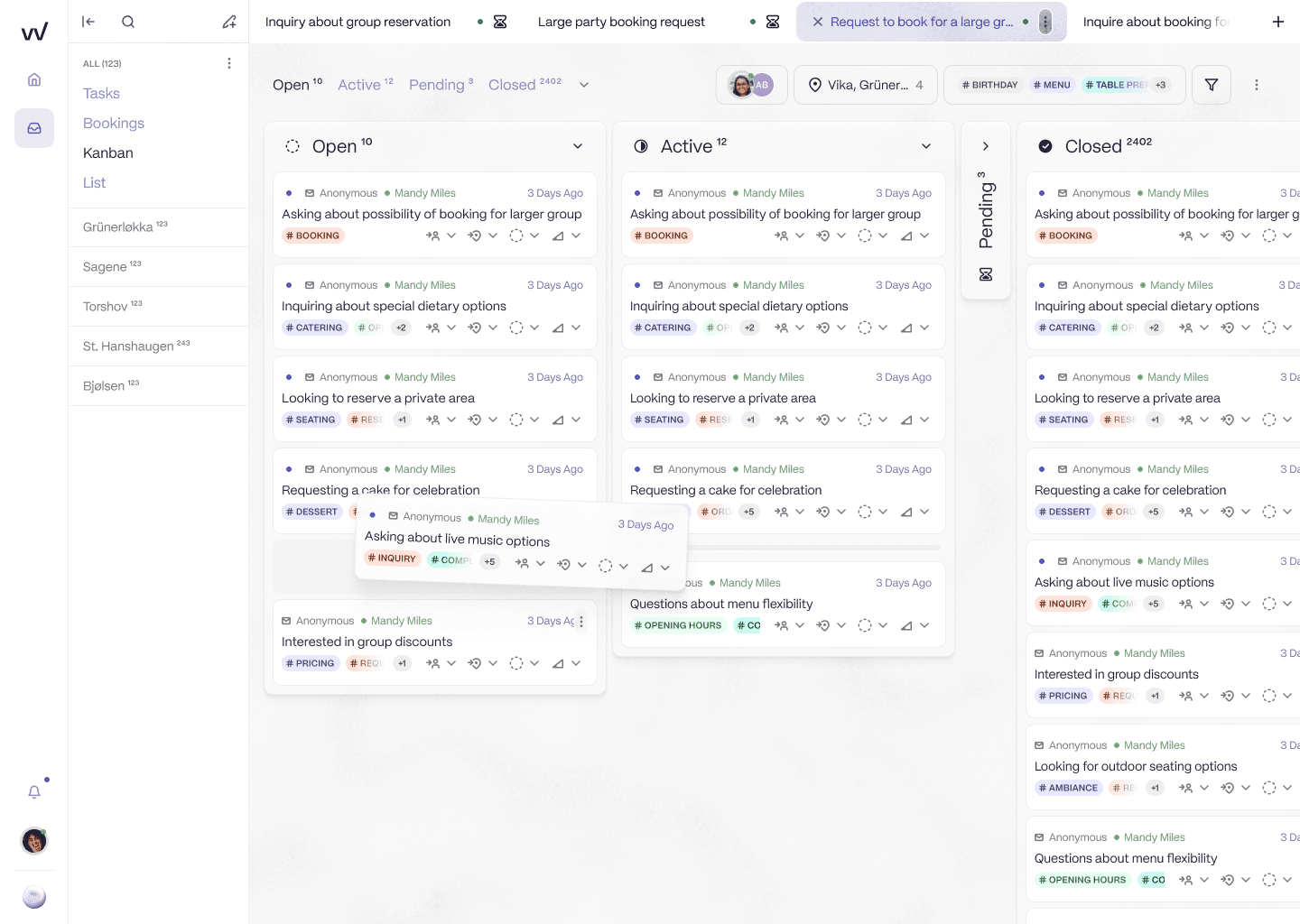
One queue per venue, so session times and capacities never get crossed.
The AI drafts the reply in that venue's voice, grounded in its packages, its group rates and what each session can take. Party and group enquiries repeat constantly, and the draft arrives with the specifics already filled in.
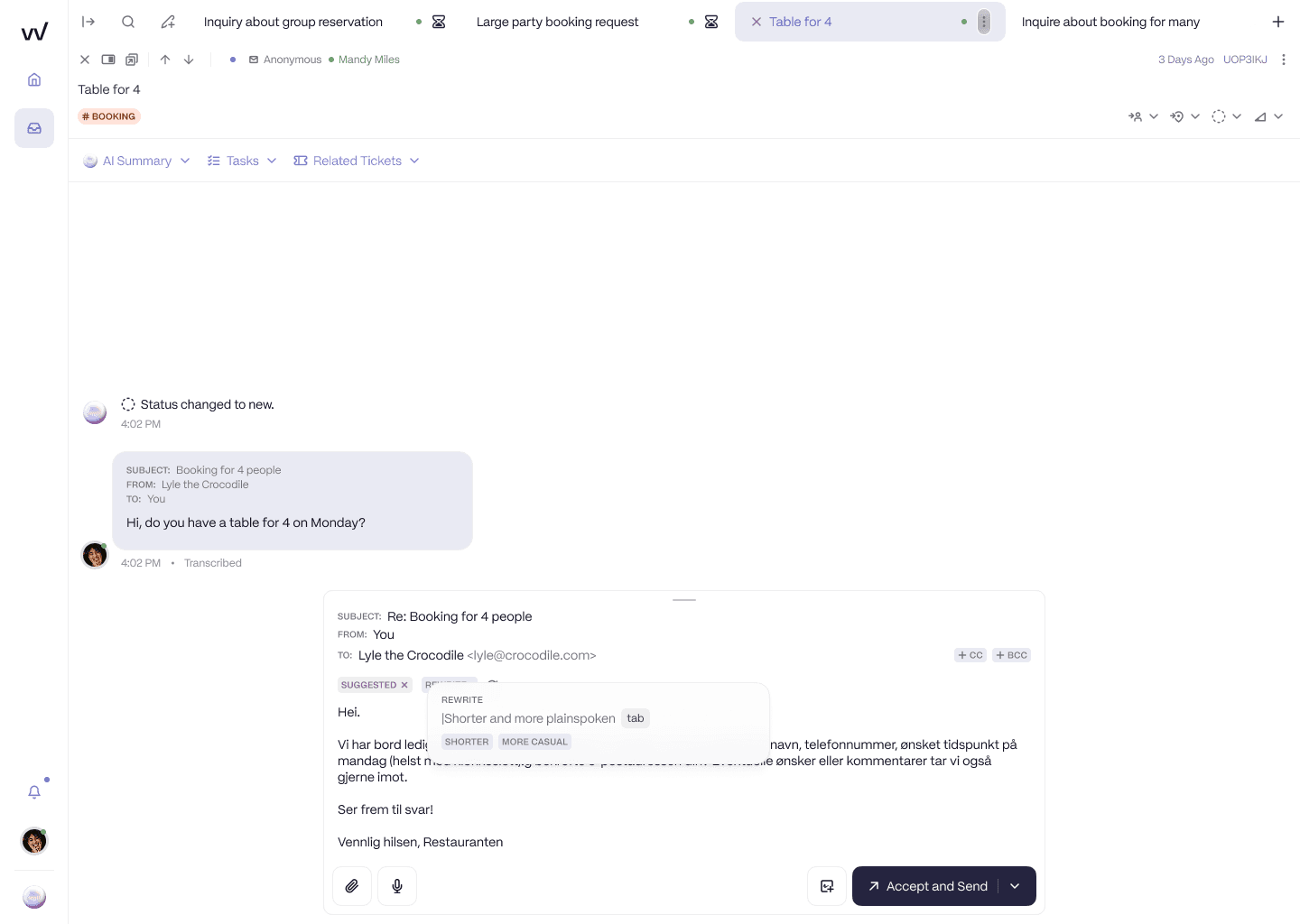
The package reply drafted in the venue's voice, ready to approve and send.
Because it connects to the booking system, the AI takes the step Zendesk cannot: it checks capacity and prepares the booking in the conversation. Small requests are handled as they land, and the group bookings, the school trips and the birthday parties that fill a session, are acknowledged instantly and held for a person to finish.
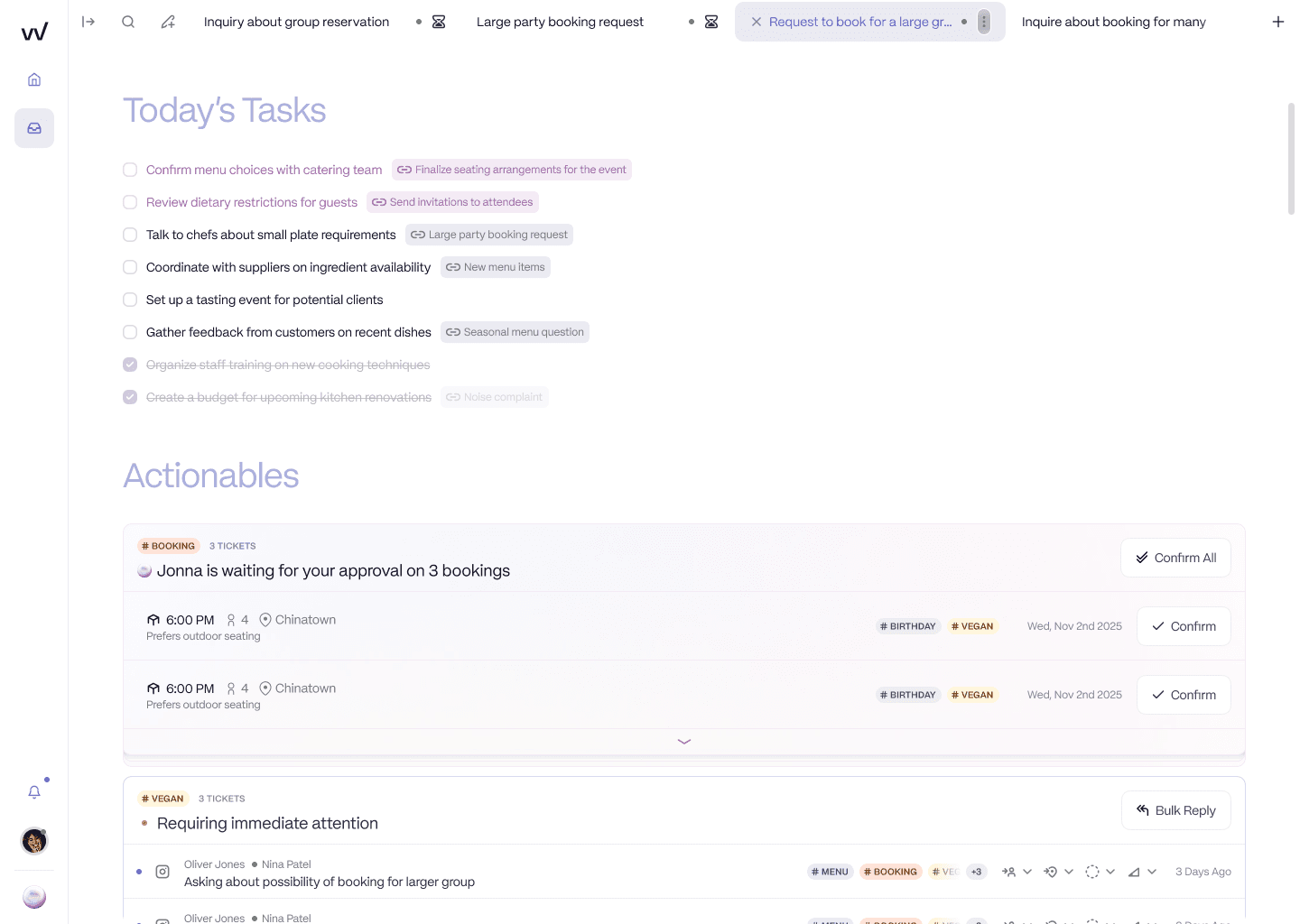
Group bookings acknowledged and prepared, waiting for a person instead of waiting to be noticed.
And because every enquiry is tracked per site, group demand becomes a number. Enquiry volume, reply speed and conversion by location, so you can see which attraction is losing parties to a slow inbox. Zendesk reports on tickets and satisfaction scores, which says nothing about how many sessions filled.
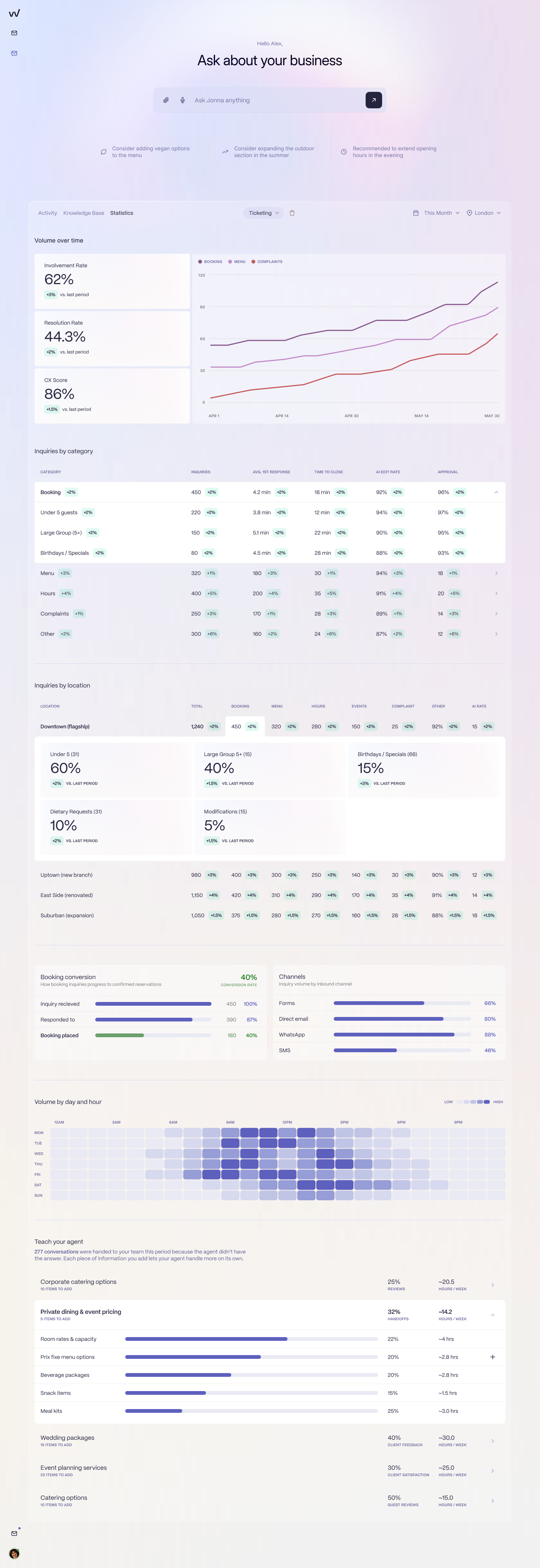
Volume, response rate and conversion by location, showing which site is losing group bookings.
An honest note on where RevVue is today
RevVue's ROLLER integration is on the roadmap. That is the honest status. For now, venues run an email-only pilot that already delivers the inbox value shown above: location-aware routing, instant acknowledgement, AI-drafted replies, high-value bookings surfaced, and reporting by location. The direct booking-system connection will deepen that when it lands, but it does not gate the value you get today. The UK AI is in pilot.
This is the move the Brasilia Group made, off a horizontal helpdesk and onto an inbox built for the job. Their founder, Nikolaos Kiosses, put it plainly: "The transition from Zendesk to RevVue has been a game changer."
If you are weighing the two, the fuller comparison is in RevVue vs Zendesk. Because party and group enquiries are where the money is for a leisure operator, how to triage high-value group bookings is the most relevant read next, and handling booking enquiries around the clock covers the evening and weekend traffic that party planning generates. To see what the AI would have said to a real enquiry your team received last week, book 20 minutes.
Frequently asked questions
Does Zendesk integrate with ROLLER?
No. Zendesk has no native integration with ROLLER, and no helpdesk appears in ROLLER's integration partner directory. Because ROLLER publishes an open API, a custom bridge is buildable, and it can copy enquiry data into a ticket or display booking records alongside it. It still cannot check live session availability, place or extend a hold, attach a party package, or create a booking in ROLLER.
Can I connect ROLLER and Zendesk with Zapier?
No. ROLLER is not on Zapier. The Roll app listed in Zapier's directory is unrelated project-management software, not ROLLER the venue-management platform. ROLLER's own integration partners are marketing and finance tools such as Mailchimp, Klaviyo, Brevo, Xero, NetSuite and Power BI. Connecting a helpdesk means building against ROLLER's open API yourself.
Does ROLLER have an open API?
Yes, and it is the most open in this category. Unlike most restaurant and venue booking platforms, which gate API access behind a partnership agreement, ROLLER publishes an open API developers can build against directly. That removes the access barrier but not the underlying one: a support helpdesk has no concept of availability, holds or packages, so even a well-built bridge leaves the booking work to be done by hand.
What do leisure venues use instead for party and group enquiries?
Most run booking enquiries through a shared Gmail or Outlook inbox even when they use Zendesk for customer service, because the helpdesk never solved the booking side. A purpose-built option is RevVue, which is location-aware and whose AI checks availability and prepares the booking inside the conversation, with high-value party enquiries surfaced for a person to nurture. Its ROLLER integration is on the roadmap, with an email-only pilot available now.