ROLLER automates the messaging around a booking thoroughly, including the thing most venue software ignores: waivers. Confirmation emails and reminders go out automatically, you can configure reminders anywhere from one to 14 days ahead, and the same messages carry booking details, directions, waiver links and upsell offers. Guests are prompted to sign digital waivers at the point of booking, and automated reminders chase the ones still outstanding. What it does not automate is the group enquiry that would have filled the session in the first place.
What ROLLER automates today
Credit where it is due, because ROLLER's automation is doing more work than a confirmation email at most attractions.
Automated message | What it does |
|---|---|
Booking confirmation | Sent on booking, customisable to carry details, directions and offers |
Booking reminder | Configurable 1 to 14 days before the visit |
Waiver prompt | Asks guests to complete digital waivers online at the time of booking |
Waiver reminder | Chases unsigned waivers before the visit, including for guests invited by the booker |
Upsell content | Offers embedded in confirmation and reminder emails |
The waiver automation is the standout and it has a direct operational payoff. Getting waivers signed before arrival rather than at a kiosk in the doorway is the difference between a queue and a smooth entry on a Saturday morning, and the reminder that chases a booker's invited guests is a genuinely thoughtful touch.
If your entry process is still slow, the fix is usually in this configuration rather than in more staff.
What ROLLER does not automate
Every message above is triggered by a booking that already exists. Once someone has bought a session, ROLLER looks after them well.
The enquiry that comes before the booking is untouched, and at a leisure venue those enquiries are where the revenue concentrates:
A birthday party for 12 asking about packages, food add-ons and an accessible lane.
A school group of 30 spread across two sessions, with a packed-lunch requirement.
Corporate away-days and lane or room hire.
Questions about age limits, socks, spectator policy or accessibility.
Anything arriving by Instagram DM, WhatsApp or the website chat widget, which ROLLER never sees.
The structural problem for an attraction is that capacity is perishable in a way a restaurant table is not. A 10am Tuesday session that runs half full cannot be recovered. The enquiry that would have filled it was sitting in a chat queue while someone worked out the group rate, and no automation existed to acknowledge it, price it or hold the slots.
What actually happens to an enquiry ROLLER cannot answer
Here is one enquiry at a venue running ROLLER well.
A chat enquiry arrives on a Sunday evening about a school group of 30 across two sessions, asking for a packed-lunch add-on and an accessible lane.
It sits. ROLLER never sees it, because it is not a booking.
On Monday someone reads it.
They open ROLLER, check whether two consecutive sessions have 15 spaces each on the date, whether the accessible lane is free in both, and what the school group rate is.
They check whether the kitchen can do 30 packed lunches that morning.
They build a quote and reply by hand.
They set a reminder to chase, because school bookings are rarely confirmed on the first message.
The school replies a week later: "It is 42 now and we need three sessions." That changes capacity, the rate band and the lunch order. Steps 4 to 7 run again.
Automation only takes over once a booking exists, at which point the confirmations, reminders and waiver chasing all run beautifully. Everything before that is manual, roughly 15 hours after the enquiry arrived, and the organiser has been emailing three venues in the meantime. One operations director described the inbox behind this workflow as "a black hole, no KPIs, no response rate, nothing."
A roughly 40-venue entertainment group lost a single booking worth £40,000 because the enquiry arrived outside working hours and nobody replied in time. A three-site pizza group put it more bluntly about a 30 to 40 cover enquiry: "It just sat there. No one saw it. They went somewhere else." At an attraction, that is a session that runs half empty and cannot be sold again.
Why the gap exists
The line is transactional versus conversational, and ROLLER sits on the transactional side by design.
Transactional automation needs a record, an event and a template. The booking exists, the clock reaches the reminder window, the email sends with a waiver link attached. ROLLER executes that loop well, which is why the waiver automation works.
An enquiry has none of the three. There is no record, because the group has not booked. There is no event, because a chat message on a Sunday is not a state change in your schedule. And no template answers it, because the reply depends on live capacity across consecutive sessions, the accessible lane, the rate band for a school and what the kitchen can produce that morning.
There is a second factor unique to timed-session venues: the answer expires. Availability that existed when the message arrived may be gone by the time someone reads it, so a slow reply is not just slow, it can be wrong. Any automation worth having has to check capacity at the moment it responds, not at the moment somebody gets round to it.
Closing that needs a layer that reads the enquiry on whatever channel it arrived, works out which site and which sessions it concerns, checks capacity live and drafts a real answer for someone to approve.
What automating the enquiry side looks like
The gap closes when the enquiry and the booking live in one place, so a party enquiry is answered and held in a single reply. This is what RevVue does, and it is easier to show than to describe.
Every enquiry is tagged to the venue it is for, which matters for an operator running several attractions with different capacities and session times. A question about one site is never answered with another site's slots.
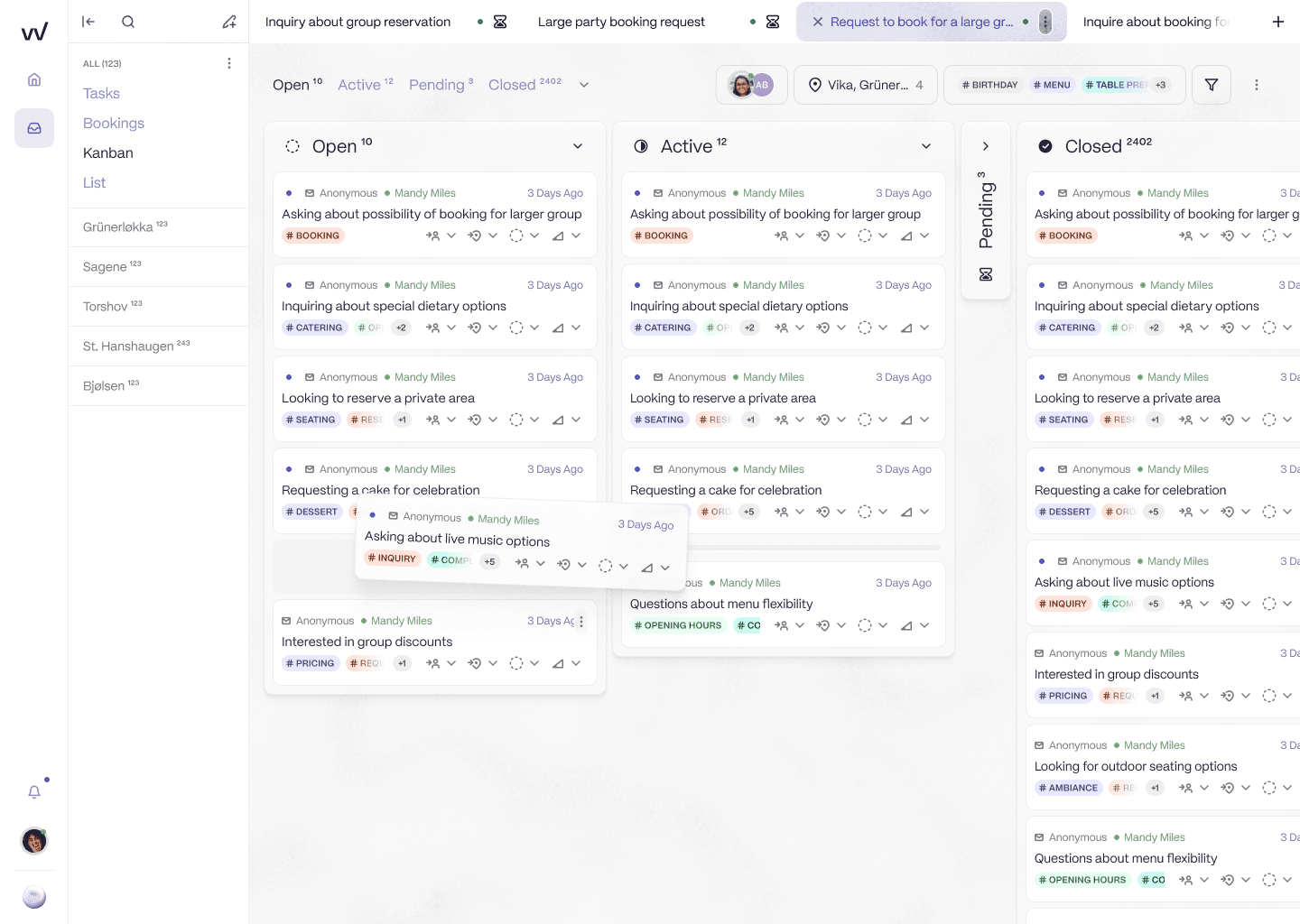
One queue per venue, so session times and capacities never get crossed.
The AI drafts the reply in that venue's voice, grounded in its packages, its group rates and what each session can take. Party and group enquiries repeat constantly, and the draft arrives with the specifics already filled in.
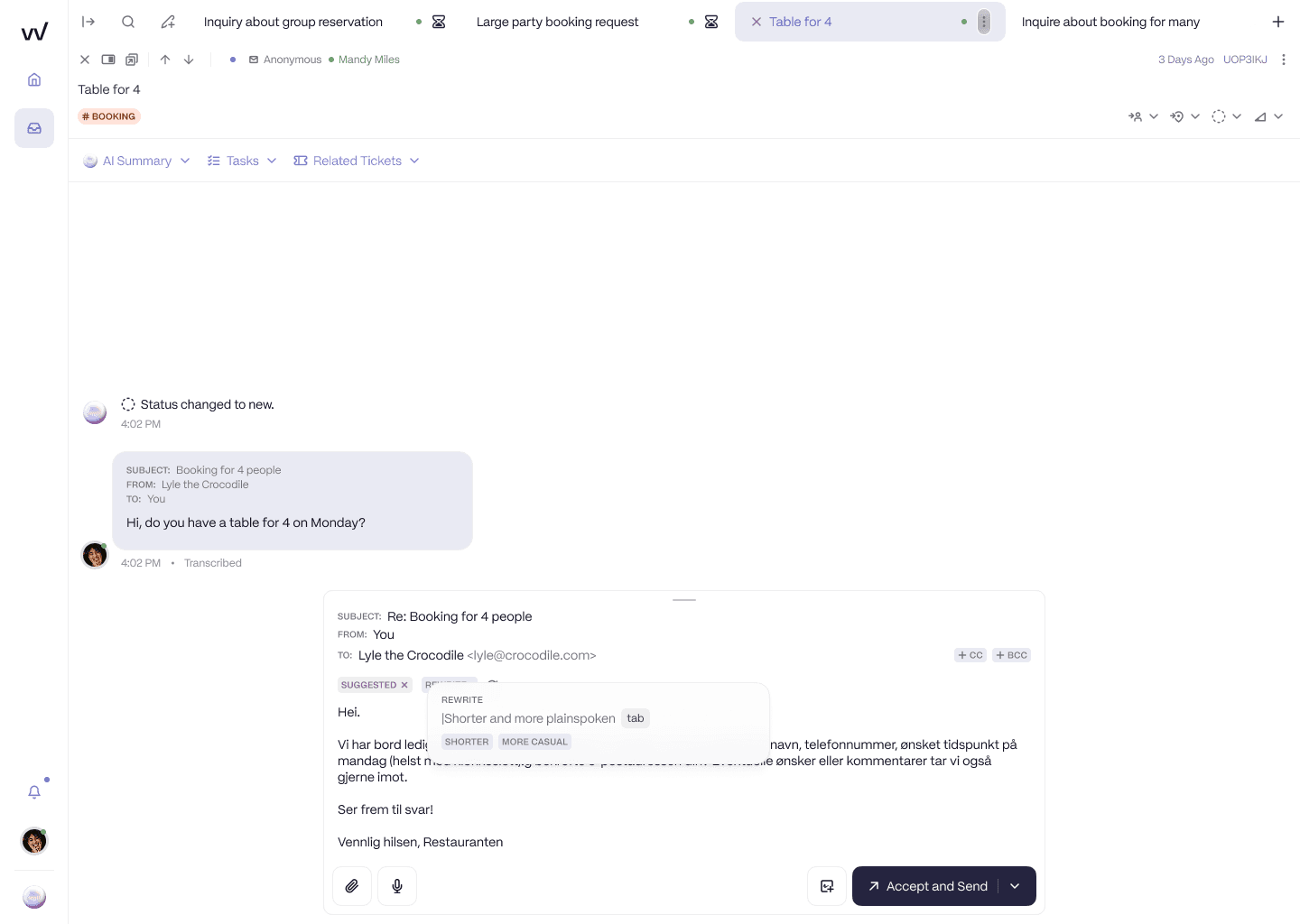
The package reply drafted in the venue's voice, ready to approve and send.
Because it connects to the booking system, the AI takes the step the chat queue cannot: it checks capacity and prepares the booking in the conversation. Small requests are handled as they land, on a Sunday evening as readily as a Monday morning, and the group bookings, the school trips and the birthday parties that fill a session, are acknowledged instantly and held for a person to finish.
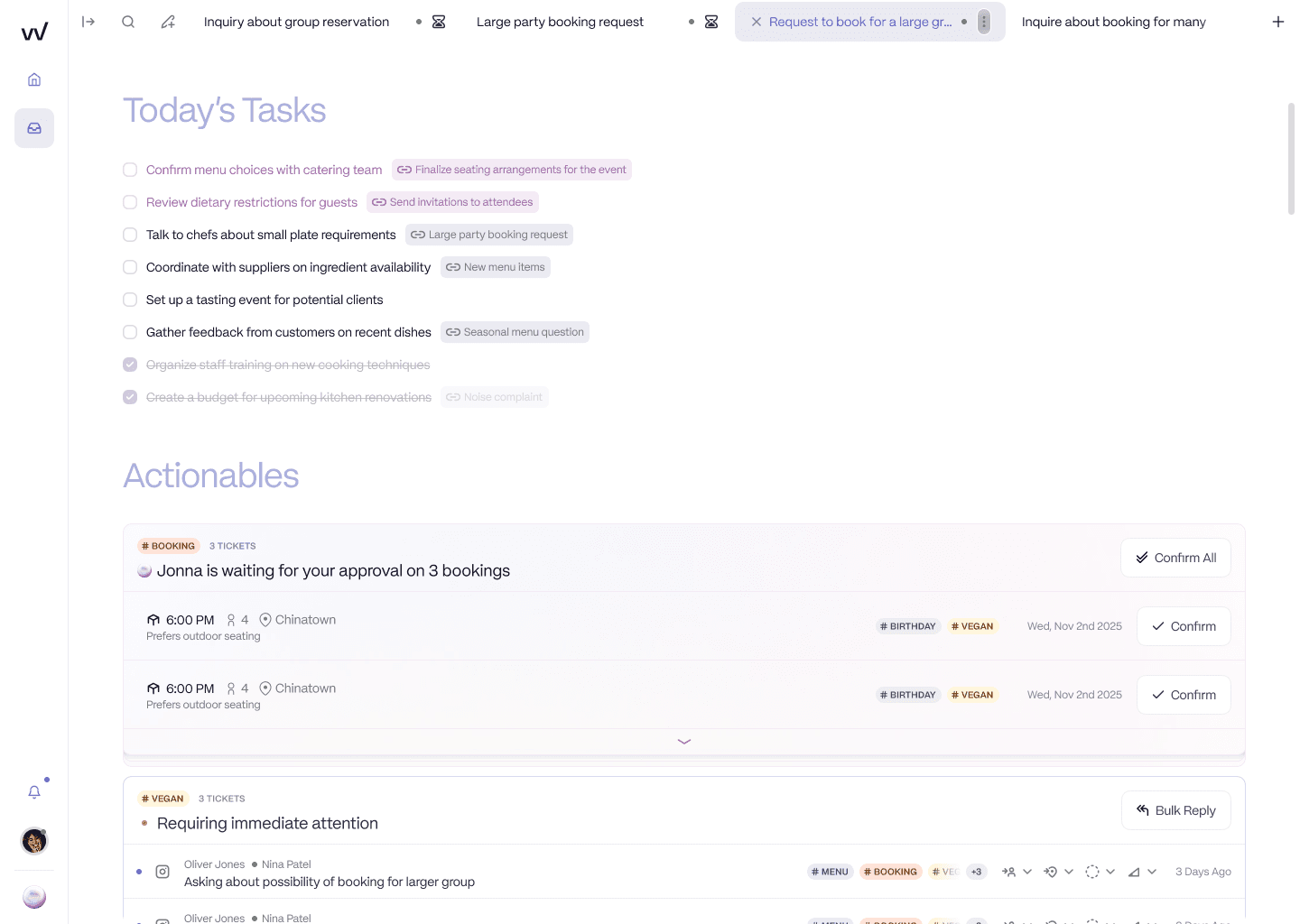
Group bookings acknowledged and prepared, waiting for a person instead of waiting to be noticed.
And because every enquiry is tracked per site, group demand becomes a number: enquiry volume, reply speed and conversion by location, so you can see which attraction is losing parties to a slow inbox.
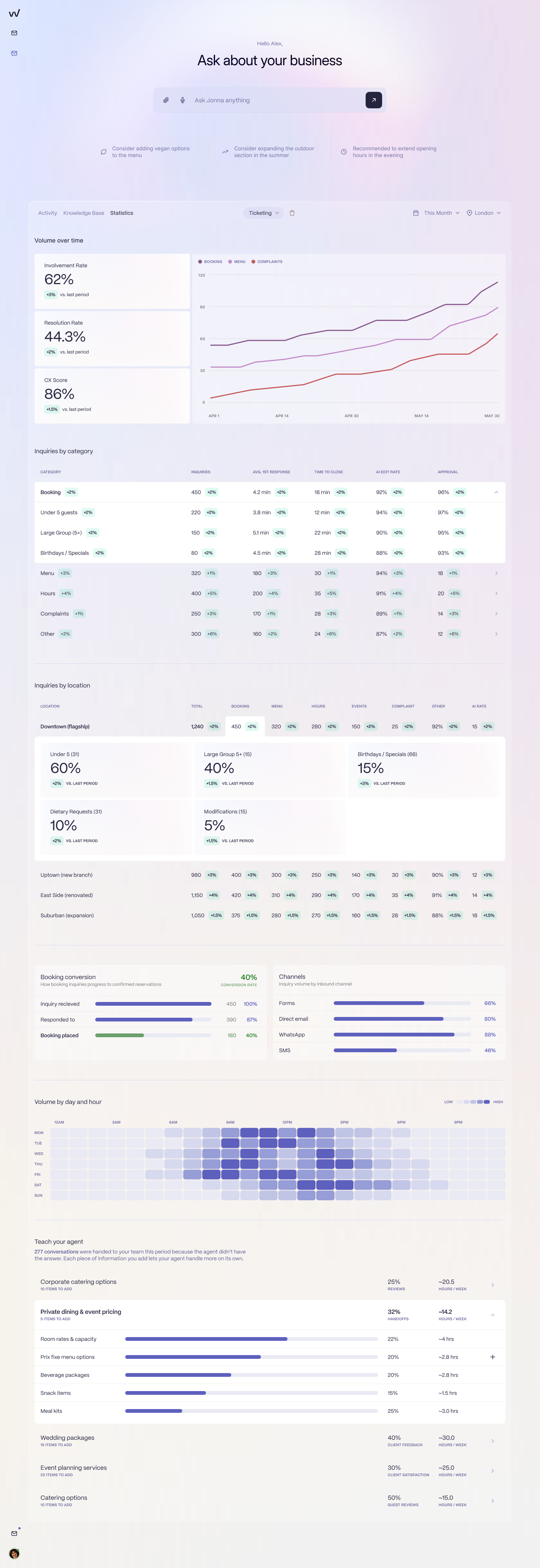
Volume, response rate and conversion by location, showing which site is losing group bookings.
An honest note on where RevVue is today
RevVue's ROLLER integration is on the roadmap and not live. That is the honest status. Venues run an email-only pilot now, which already delivers the rest: routing by location, instant acknowledgement out of hours, AI-drafted replies carrying your packages and rates, group enquiries held for a person, and reporting by location. The direct connection deepens it when it lands. The UK AI is in pilot.
Before adding anything, check your waiver and reminder configuration in ROLLER. If waivers are still being signed at the door, that is a faster win than any new tool.
This is the move the Brasilia Group made, off a horizontal helpdesk and onto an inbox built for the job. Their founder, Nikolaos Kiosses, put it plainly: "The transition from Zendesk to RevVue has been a game changer."
Because group and party bookings are where the revenue is for a leisure operator, triaging high-value group bookings is the most relevant read next, and if you are weighing a helpdesk for this, does Zendesk integrate with ROLLER answers that directly. To see what the AI would have said to a real enquiry your team received last week, book 20 minutes.
Frequently asked questions
What email does ROLLER automate?
ROLLER sends automated booking confirmations and reminders, and both can be customised to carry booking details, directions, waiver links and upsell offers. Reminders can be configured to send between one and 14 days before the visit. It also prompts guests to complete digital waivers online at the time of booking and sends automated reminders chasing unsigned waivers, including to guests invited by the person who made the booking.
Can ROLLER answer inbound party and group enquiries automatically?
No. Every ROLLER automation is triggered by a booking that already exists. A group enquiry comes from someone who has not booked, so there is no record to trigger from, and no template can answer it because the reply depends on live capacity across consecutive sessions, the accessible lane, the school or corporate rate band and what the kitchen can produce.
Why does a slow reply cost more at an attraction?
Because capacity is perishable and the answer expires. A 10am Tuesday session that runs half full cannot be sold again, and availability that existed when the enquiry arrived may be gone by the time someone reads it. So a slow reply is not only slow, it risks being wrong, and the organiser has usually emailed two other venues while waiting.
How do you automate the enquiry side?
You need something that reads the enquiry on whatever channel it arrived, works out which site and which sessions it concerns, checks capacity at the moment it replies and drafts a real answer for a person to approve. That is RevVue. Its ROLLER integration is on the roadmap, with an email-only pilot available now covering cross-channel capture, out-of-hours acknowledgement and reporting on group demand by site.